









CharCoat CTI Ceramic Thermal Insulation Coating – Thin-Film Insulation for Pipes, Tanks & Roofs
Sprayed-on ceramic insulation that cuts heat loss, stops condensation and corrosion under insulation — applied without shutting down.
Request price
CharCoat CTI is a ceramic thermal insulation coating sprayed directly onto the substrate. Vacuum-filled ceramic microspheres, silicon microspheres and pigments slow the transfer of heat through the film — "a cross between double-glazing and regular insulation", in CharCoat's words — and reflect heat as well, so it is true insulation rather than just a reflective paint. It protects pipes, tanks, roofs, walls and vehicles, prevents condensation and corrosion under insulation (CUI), and can be applied to hot equipment without stopping production. Made by CharCoat Passive Fire Protection, whose coatings are applied in more than 40 countries.
At a glance
- Product: CharCoat CTI ceramic thermal insulation
- Thermal conductivity: 0.001–0.004 W/mK
- R-value: about RSI-1 per mm (conduction only; higher with reflection)
- Versions: CTI (to +210 °C), CTI-300 (to +300 °C), CTI-600 (to +600 °C), CTI-120 for low-temperature pipes
- Application: brush, roller, spatula or airless spray
- Coverage: 1.25 L/m² per 1 mm DFT
- Warranty: 10 years, as stated by CharCoat
Why choose CharCoat CTI
- Lower conductivity than conventional insulation — 0.001–0.004 W/mK against about 0.04 for glass wool and 0.045 for rock wool (CharCoat comparison).
- No corrosion under insulation — the coating itself is the insulation, and you can inspect the surface without stripping it.
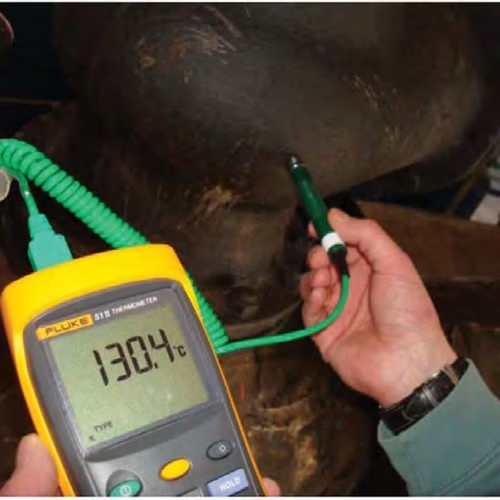
- Apply it hot, keep running — applied on surfaces up to +150 °C (CTI and CTI-300); one application was made on a 130 °C pipe.
- Stops condensation, radiant heat, corrosion and water ingress in one coat system.
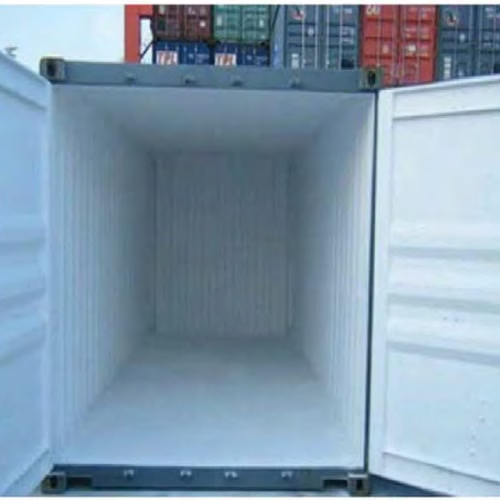
- Proven savings — in a side-by-side container test the coated container stayed 14 °C cooler without A/C and used under half the power with A/C.
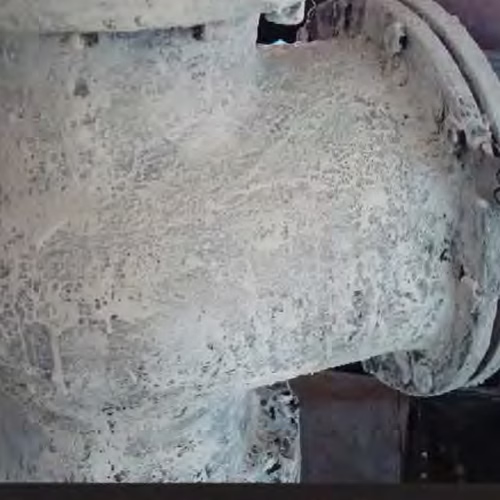
- Fits complex shapes — valves, flanges and intricate parts that are hard to lag.
Specifications
- CharCoat CTI: general protection, insulation and waterproofing; in service -60 °C to +210 °C (peak +250 °C for 1 hour); all surfaces except polyethylene; normal thickness 0.5–4 mm
- CharCoat CTI-300: high-temperature insulation with higher chemical resistance; -60 °C to +300 °C (peak +350 °C for 2 hours); normal thickness 1–2 mm
- CharCoat CTI-600: very high-temperature insulation; -60 °C to +600 °C (peak +650 °C for 2 hours); normal thickness 1–4 mm
- CharCoat CTI-120: for low-temperature pipes
- Application conditions: ambient +7 to +45 °C; substrate +7 to +150 °C during application (+7 to +40 °C for CTI-600); 0.5 mm DFT per coat
- Coverage: 1.25 L/m² per 1 mm DFT (theoretical)
- Thickness guide (pipes and tanks): 0.5 mm for 0–50 °C; 1 mm for 50–100 °C; 1.5 mm for 100–150 °C; 2 mm for 150–175 °C; 3 mm for 175–200 °C; 4 mm for 200–300 °C; 5 mm above 300 °C; 1.5–3 mm for sub-zero lines
- Measured results: about 50% heat-flux reduction at ~1 mm on a 63 °C pipe; up to 90% in other tests at 1 mm
- Other: water-based; production ISO 9001 and ISO 14001 certified; adds sound insulation; can be top-coated for colour or chemical resistance
Where it is used
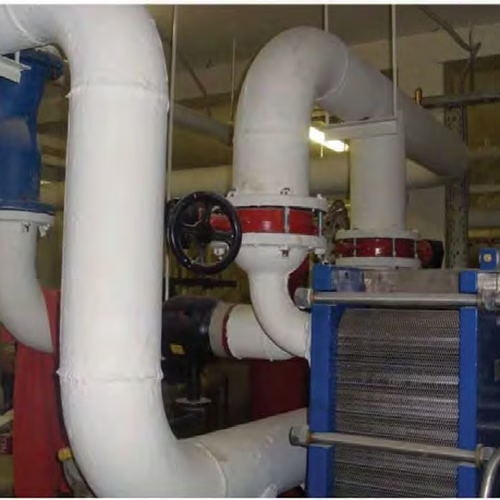
- Steam, hot-water and process pipelines, boilers and economisers
- Tanks and vessels (CUI prevention, cold-wall effects)
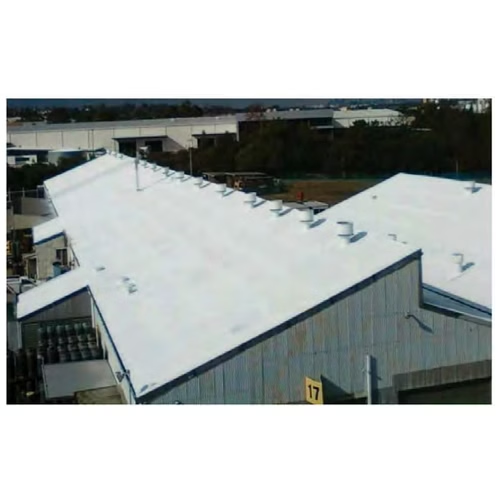
- Metal roofs, warehouses and workshops
- Containers, cabins, reefer trucks and cold rooms
- Bridges, rail and long steel structures (reduces thermal expansion)
- Personnel protection on hot surfaces
Which CTI version do I need?
- CharCoat CTI — up to +210 °C: general insulation, roofs, containers, water and process lines.
- CTI-300 — up to +300 °C with higher chemical resistance: hot process equipment.
- CTI-600 — up to +600 °C: very hot substrates.
- CTI-120 — low-temperature pipes.
Related products
Frequently asked questions
How can a thin coating insulate?
Its ceramic and silicon microspheres slow heat flow through the film while also reflecting heat; CharCoat quotes a conductivity of 0.001–0.004 W/mK and roughly RSI-1 per millimetre from conduction alone.
Can it be applied while the plant is running?
Yes — CTI and CTI-300 can be applied to substrates up to +150 °C; very hot surfaces are first given heavily diluted coats until bubbling stops.
How thick should it be?
It depends on the surface temperature — for example 0.5 mm for 0–50 °C, 1 mm for 50–100 °C and 4 mm for 200–300 °C on pipes and tanks.
Does it prevent corrosion under insulation (CUI)?
Yes — there is no separate lagging to trap moisture, and the surface can be inspected without removing insulation.
Which temperatures can it take?
CTI -60 to +210 °C, CTI-300 up to +300 °C, CTI-600 up to +600 °C, with short peaks above those.
Where can I buy it in India?
From Jai Enterprises, which supplies across India from Bhilai and Raipur, Chhattisgarh. Call +91 9340081159.
How to order
Supplied by Jai Enterprises, despatched from Bhilai and Raipur, Chhattisgarh, to sites across India. To request a price, call +91 9340081159 or send an enquiry from this page with your quantity and site details, and we will confirm availability, lead time and the right model for the job.
Applications
Availability: Enquiry-based — contact us for stock and lead time.